

The scholarship landscape is changing, and fast.
What was once a relatively straightforward process of awarding funds is now part of a much broader scholarship ecosystem that includes student experience, workforce development, long-term engagement, and measurable outcomes. As we move into 2026, scholarship providers face a critical question:
How do you stay relevant when expectations are rising, and the ecosystem around you is expanding?
The answer isn’t bigger awards or more applications. It’s a smarter, more connected approach to how scholarships are designed, managed, and experienced.
Why the Scholarship Ecosystem Is Expanding
Scholarships no longer exist in isolation. They sit at the intersection of education access, career pathways, and student success, and several forces are driving that expansion.
Students Expect More From Scholarship Providers
Today’s students are evaluating scholarships the same way they evaluate brands and institutions: based on clarity, trust, and experience.
They’re asking:
- Is the application process straightforward and accessible?
- Will I hear back? Or be left guessing?
- Does this opportunity connect to anything beyond funding?
Scholarship providers that prioritize scholar engagement, not just selection, are better positioned to earn trust and stand out in a crowded field.
Employers and Foundations Are Rethinking Scholarships
More organizations are launching scholarships tied to:
- Workforce readiness and talent pipelines
- Internships or experiential learning
- Long-term community impact
This means scholarships are increasingly connected to broader programs and outcomes. Managing that complexity with spreadsheets or disconnected tools is becoming harder to justify and harder to scale.
Technology Has Changed the Baseline Experience
Modern scholarship management software has raised expectations for both students and administrators.
Students now expect:
- Mobile-friendly applications
- Clear communication and status updates
- Faster, more transparent decisions
Administrators need:
- Centralized data
- Fewer manual processes
- Better insight into what’s working and what’s not
Platforms like Kaleidoscope emerged in response to this shift, helping providers manage the full scholarship lifecycle while keeping the experience human on both sides.
What Staying Relevant Looks Like in 2026
Relevance isn’t about chasing every new trend. It’s about evolving intentionally as the scholarship ecosystem grows more connected.
Shift From Transactions to Scholar Relationships
In 2026, the most effective scholarship programs won’t end at disbursement.
Forward-looking providers are building systems to:
- Track scholar engagement beyond the award
- Maintain communication throughout a student’s journey
- Understand long-term outcomes, not just annual cycles
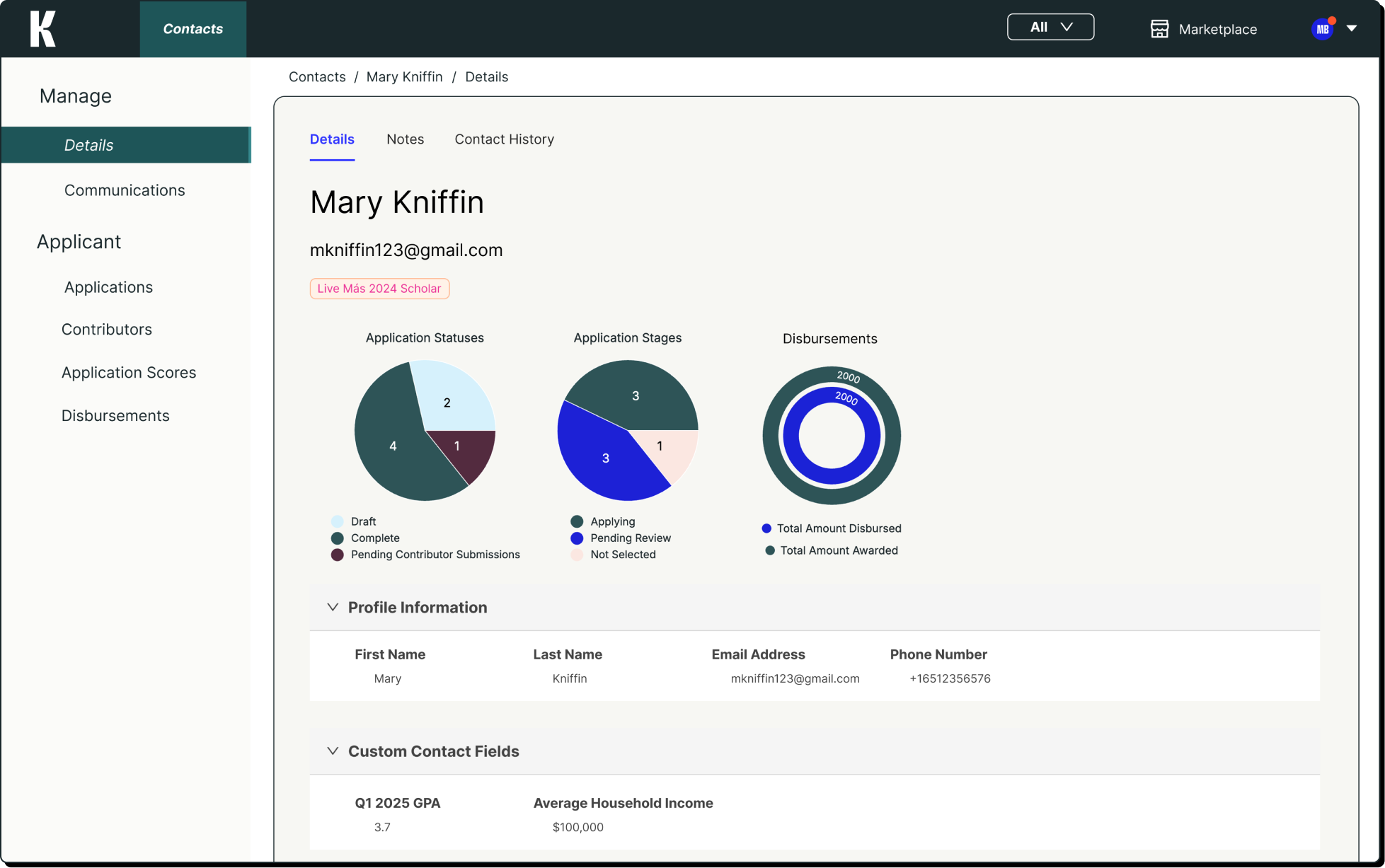
This is where Scholar Relationship Management (SRM), a growing focus in the scholarship space, becomes essential. When scholar data, communication, and reporting live in one place, providers can build real relationships without adding operational burden.
Design the Application Experience With Intention
A scholarship can be generous and still feel inaccessible.
Providers staying relevant are actively reviewing:
- Application length and clarity
- Required uploads and redundancy
- Feedback from applicants who didn’t finish
Even small changes, such as simplified prompts, clearer instructions, and better communication, can significantly improve completion rates and equity. Many providers now create post-application surveys or use platform insights (like those available in Kaleidoscope) to guide these improvements year over year.
Use Data to Drive Decisions, Not Just Reports
Data shouldn’t just exist for end-of-year summaries.
In an expanding ecosystem, data helps providers:
- Identify drop-off points in the application process
- Understand which outreach channels attract qualified applicants
- Measure engagement and outcomes over time
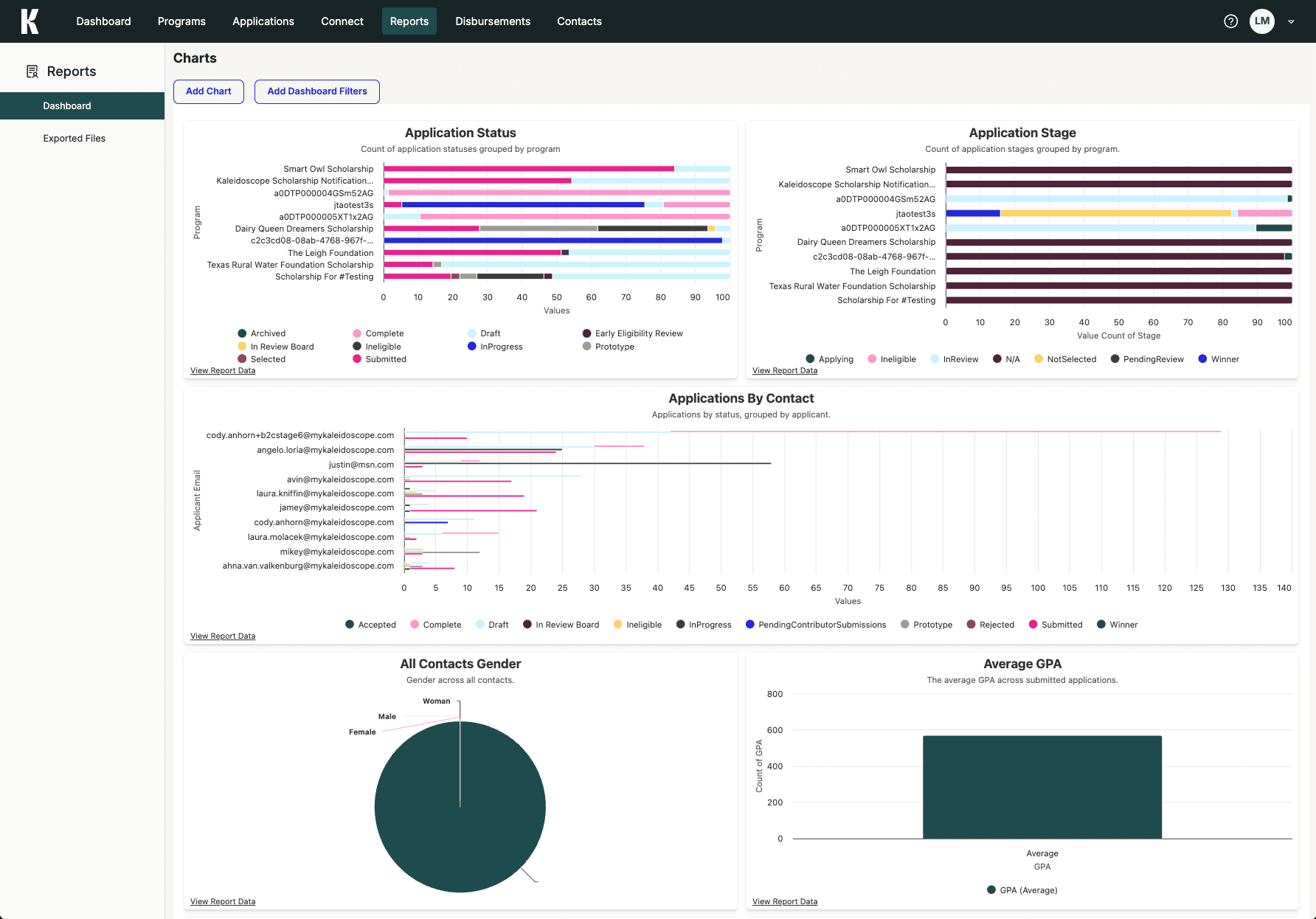
Centralized reporting dashboards allow teams to move faster, justify decisions, and demonstrate impact to stakeholders without stitching together information from multiple systems.
Connect Scholarships to Real Outcomes
More boards, donors, and partners are asking: What changed because this scholarship exists?
Staying relevant means being able to answer that with confidence:
- How are scholars progressing academically or professionally?
- How does the scholarship support broader access or workforce goals?
- What does long-term impact look like? not just annual spend
Scholarship platforms that track the full scholar journey make it easier to tell this story clearly and credibly.
The Opportunity for Scholarship Providers
An expanding scholarship ecosystem isn’t a threat; it’s an opportunity.
In 2026, the providers who lead will be those who:
- Treat scholar engagement as a core strategy
- Use technology to simplify complexity, not add to it
- Build programs that extend beyond a single award cycle
- Align scholarships with long-term student and community outcomes
Tools like Kaleidoscope exist to support this evolution, helping providers modernize their scholarship management approach while staying grounded in what matters most: expanding access and opportunity for students.
The ecosystem may be growing, but with the right strategy, your impact can grow with it.
Resources for Sponsors

Read more


Read more

Read more

Read more

Read more

Read more

Read more