

Most scholarship programs collect data. If you want to improve your application numbers, it’s important to look at your data between cycles.
Application volume.
Completion rates.
Reviewer scores.
Demographic breakdowns.
But high-performing scholarship programs go further; they use scholarship data analysis to shape the next cycle’s strategy.
The real value of reporting isn’t documenting what happened.
It’s improving what happens next.
Why Scholarship Data Analysis Matters for Program Strategy
After a scholarship cycle closes, many providers review top-line metrics:
- Total applications received
- Number of awards distributed
- Average reviewer score
- Basic applicant demographics
These numbers are useful, but they rarely drive strategic change.
Strong scholarship program strategy requires deeper analysis:
- Are we attracting qualified applicants?
- Where are applicants dropping off?
- Did our review process create bottlenecks?
- Is our messaging aligned with who we want to reach?
Without this level of analysis, reporting becomes retrospective instead of strategic.
High-performing programs don’t just review numbers; they define what they’re measuring and why. If you’re not sure which data points matter most, start with the core scholarship metrics providers should track each cycle and build from there.
Focus on Completion Rate, Not Just Application Volume
Application volume is easy to measure.
Application completion rate reveals operational friction.
Review:
- Applications started vs. submitted
- Drop-off by stage (essay, uploads, references)
- Average time to completion
If a significant drop-off occurs at one stage, it may indicate:
- Confusing instructions
- Unexpected effort
- Poor timing within the academic calendar
Using this scholarship data insight allows you to simplify or clarify specific sections before the next cycle launches.
Often, the issue isn’t applicant quality, it’s experience design. We’ve seen programs dramatically improve outcomes by refining how they manage
live applications and reduce friction during active cycles.
Evaluate Applicant Fit Using Scholarship Metrics
More applications do not always mean stronger outcomes.
Use your scholarship reporting data to analyze:
- Percentage of applicants meeting minimum qualifications
- Distribution of reviewer scores
- Trends in applicant academic or demographic profiles
If most applications score low, that may indicate:
- The eligibility criteria are too broad
- Marketing is attracting the wrong audience
- The selection criteria are unclear
Strategic adjustments to eligibility language and outreach can improve applicant quality without increasing volume.
Sometimes “poor fit” isn’t a targeting problem; it’s a visibility problem. Understanding how students actually find and evaluate scholarships today can reshape how you position your program.
Use Review Process Data to Improve Scoring Consistency
Scholarship program improvement should include the review experience.
Analyze:
- Score variance between reviewers
- Rubric categories with large scoring gaps
- Time required per review
- Review completion timelines
Inconsistent scoring often signals unclear rubric definitions or insufficient reviewer onboarding.
Refining evaluation criteria between cycles strengthens fairness and efficiency in the next round.
If scoring feels inconsistent, the problem often starts before review begins. Clear criteria, aligned reviewer training, and thoughtful process design are critical. Here’s a deeper look at how strong programs structure their selection process for fairness and clarity.
Analyze Timeline and Communication Impact
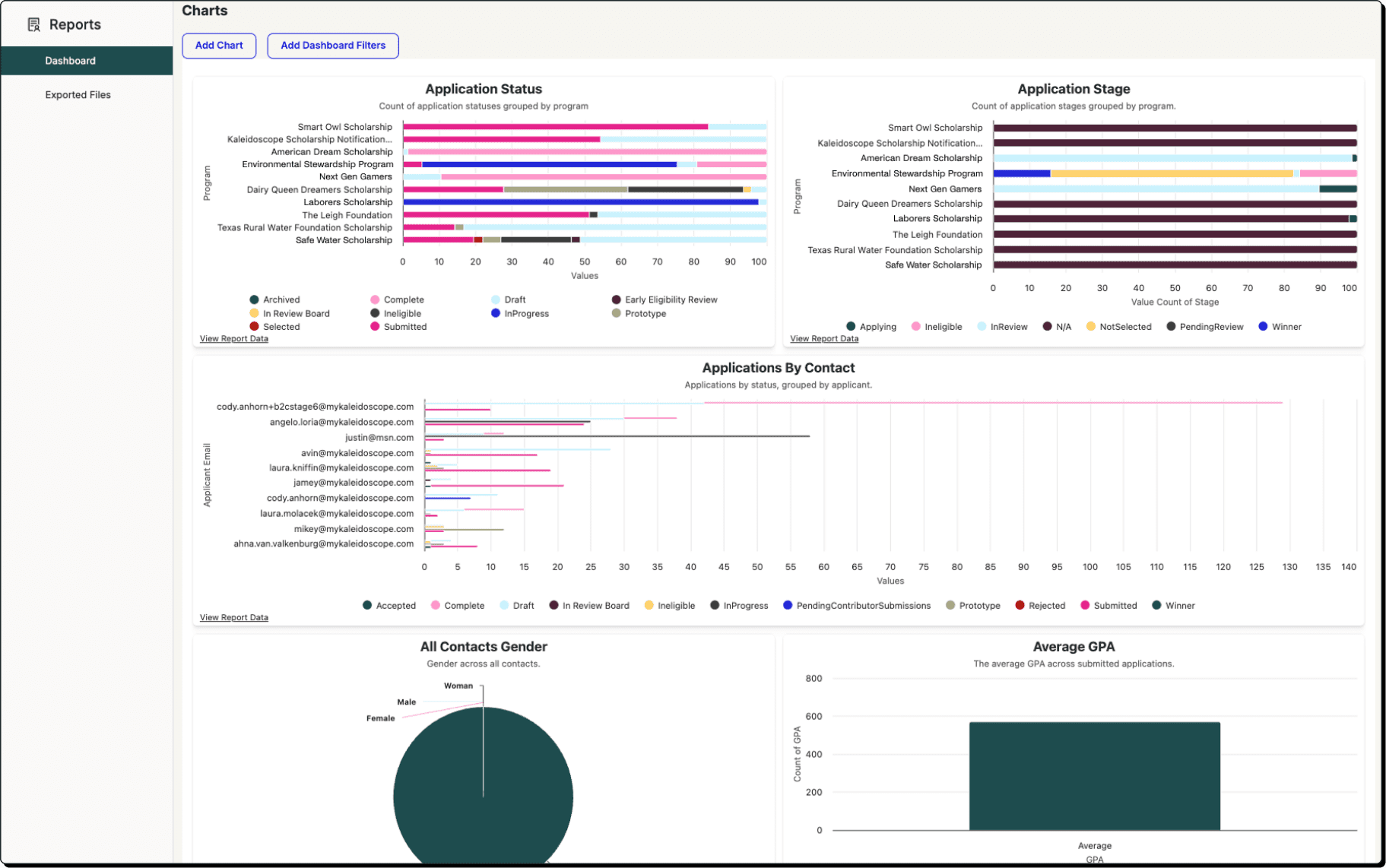
Scholarship reporting dashboards can reveal communication effectiveness.
Look at:
- Application start spikes after marketing emails
- Completion surges after reminders
- Support request volume by date
- Drop-off trends during holidays or breaks
This data helps optimize:
- Launch timing
- Reminder cadence
- Staffing during peak support periods
Instead of guessing on a communication strategy, providers can rely on measurable trends.
Communication gaps often show up in your data before they show up in complaints. That’s why many providers now build intentional
communication campaigns that guide applicants without overwhelming them.
Use Award Data to Shape Long-Term Scholarship Strategy
Beyond applications and reviews, award data informs long-term program evaluation.
Review:
- Award distribution trends over time
- Renewal or multi-year retention rates
- Engagement levels post-award
- Outcome tracking (if available)
These insights help providers:
- Refine eligibility focus
- Improve outreach to underrepresented groups
- Strengthen alignment between mission and award outcomes
Award data becomes even more powerful when it connects to long-term scholar engagement. Providers investing in scholar relationship management strategies beyond the award notification are gaining a clearer picture of impact.
Turn Scholarship Reporting Into Actionable Strategy
Strong scholarship programs document three things between cycles:
- What will remain unchanged
- What will be adjusted
- What will be tested
Examples of data-driven improvements:
- Simplifying a high drop-off question
- Narrowing eligibility criteria for a better fit
- Adjusting review timelines to reduce bottlenecks
- Improving communication transparency
Small, targeted changes compound across cycles.
Final Thought: Move From Reporting to Refinement
Collecting scholarship metrics is not the goal.
Using scholarship data to improve your next application cycle is.
When providers shift from reactive reporting to a proactive strategy, each cycle becomes more efficient, more aligned, and more impactful than the last.
The most effective teams don’t wait until applications reopen to think strategically. They use the “quiet season” to document lessons learned and refine their approach. Here’s what strong scholarship programs prioritize between cycles.
FAQs for sponsors
By identifying drop-off points and simplifying high-friction sections.
Completion rate, reviewer consistency, applicant fit, and timeline performance.
At a minimum, between application cycles before launching the next round.
Resources for Sponsors

Read more


Read more

Read more

Read more

Read more

Read more

Read more